How AI is changing both sides of tourism.
Thank you for joining us in Fairbanks. This page gathers everything from Janette Roush's keynote at the ATIA Annual Convention & Trade Show in one place: the examples, the numbers, and a few easy ways to get started. AI is opening new doors for how travelers find Alaska and new ways to lighten the work behind the scenes. Come back anytime.
AI touches two sides of every tourism business: how travelers discover you, and how your team gets the work done. You don't need a tech background to start on either one, and small experiments add up fast. Click between the two views to explore.
Travelers plan whole trips in a chat window. Google's AI Overviews answer the question before anyone clicks through. Personal agents are starting to book on a traveler's behalf. Each shift is an opening for tourism businesses that make themselves easy for AI to find, read, and trust.
Four examples from Brand USA, each a step more ambitious than the last. Janette built them herself as a theater major who spent 20 years on Broadway, with no tech background.
Real searches Janette ran while planning this trip to Fairbanks, and what each one means for an Alaska business.
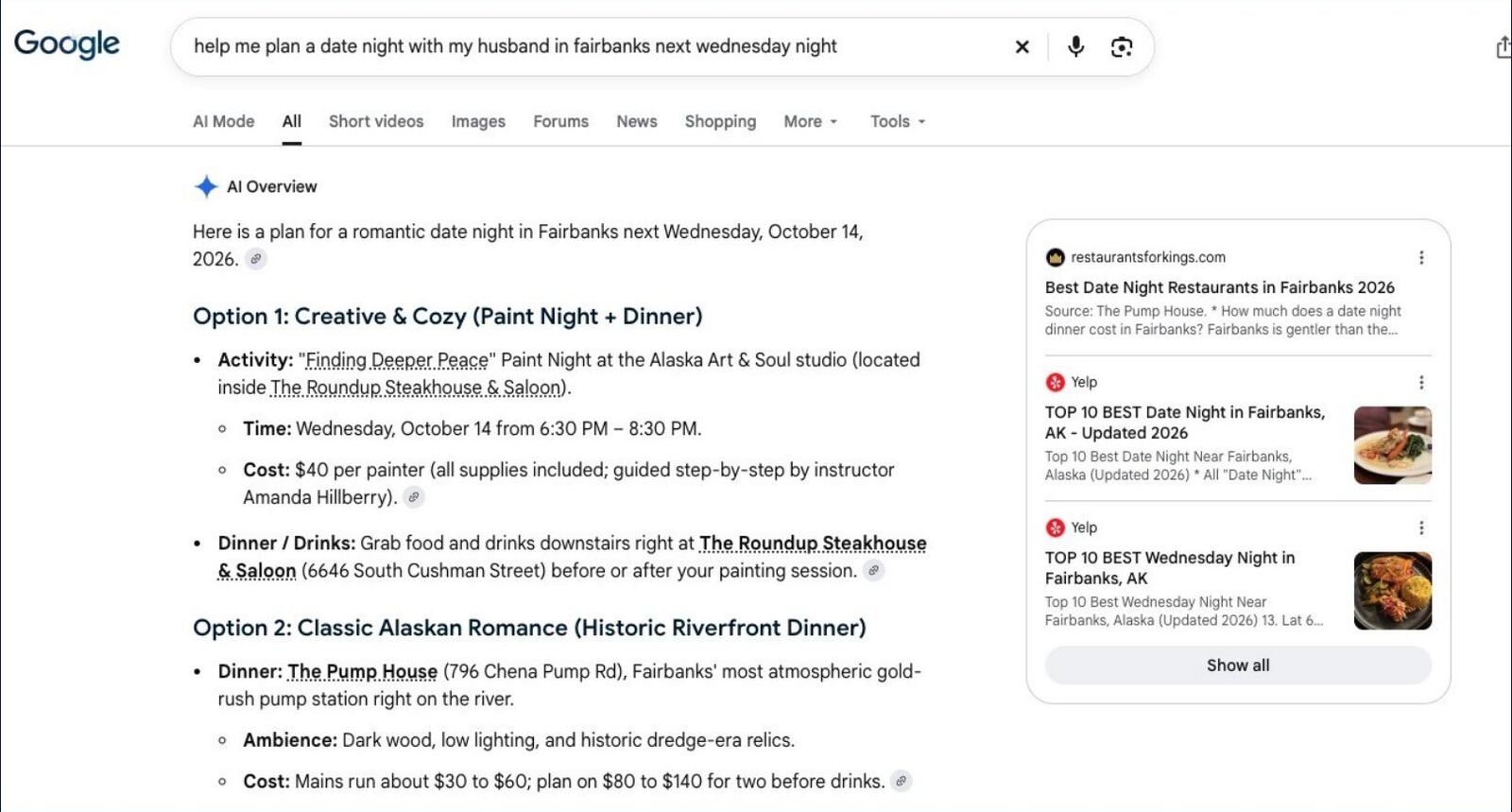
Janette asked Google to plan a romantic date night in Fairbanks. The AI Overview suggested The Pump House as its second option, which is where she and her husband Jeff planned to go after the talk. The source link beside the answer pointed to an AI-built restaurant website, where every page was designed for AI discovery. Alaska's own voices can claim that ground. Tools like Claude and Lovable make an AI-ready website simple to build.
Before the trip, Janette asked ChatGPT whether she could get an Uber at the Fairbanks airport after a 12:45 a.m. landing. Travelers bring the whole trip to the chat now, from flights to the ride from the airport.
Southwest Airlines launched a ChatGPT plugin on October 6, 2026. Travelers compare real-time fares inside ChatGPT, then finish the booking on Southwest.com.
Meta's Muse app connects to a traveler's email, Instagram, and other apps. Janette asked it to book a car from the Memphis airport to Oxford, Mississippi. The first company's website blocked bot traffic, so Muse booked with the second. Travelers will expect their agents to finish the job.
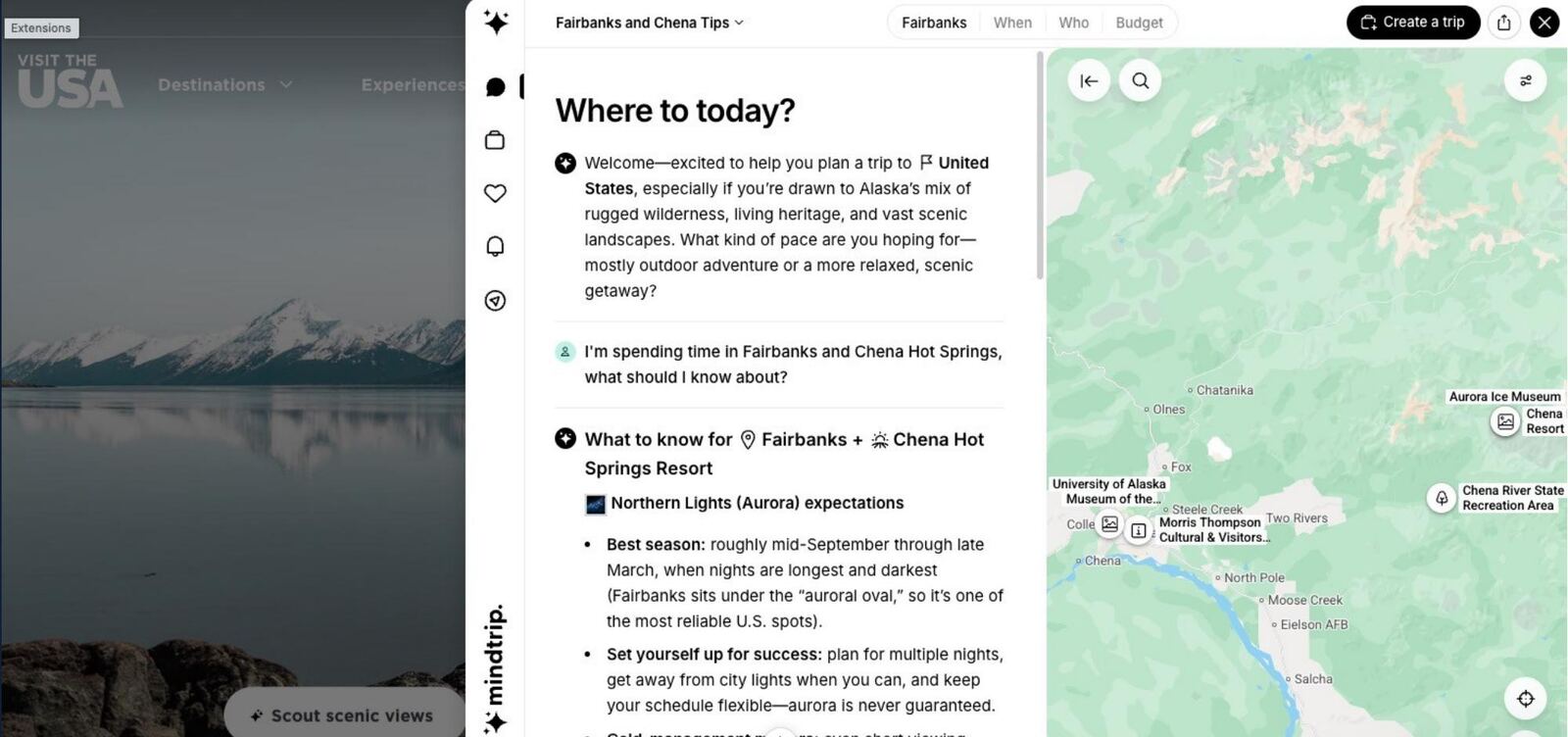
VisitTheUSA.com runs an AI trip planner built with Mindtrip. Brand USA can read every conversation and connect it to its website analytics. A paid campaign in India can be traced to the chats it started, what those travelers asked about, and even how many people are coming on the trip.
That is a much richer picture than page counts, bounce rate, and time on site.
The details your staff answer on the phone are exactly what AI looks for. Put them on your website as text, in as much detail as you can.
A DMO or chamber can choose an expert on a topic, explain what makes them an authority, and put their name on the article. That signal tells ChatGPT a real person was involved.
AI systems look for outside signals: press coverage, reviews, and Reddit threads. Earned media now shapes the answers AI gives about your business.
We still need a house on the internet that we own, to hold all of our content. People may visit it less, and they will expect to see what's in it inside their own personal AI.— JANETTE ROUSH

A look at where booking goes over the next two to five years, through a rural destination already building for it.

Voss is a rural Norwegian destination known for outdoor adventure, with a very small DMO. Its leader came from e-commerce and marketing tech, and decided the most important thing Voss can do for its future is make every business in town bookable by AI.
Many of those businesses are one- or two-person operations renting snowmobiles or outdoor gear, without much search visibility. Visit Voss connects each operator's existing booking system, whatever it is, to an agentic booking layer. When more travelers plan with personal AI, everything in Voss will be ready to book.
The Voss model, top to bottom. Click a layer to open it.
AI can find your business, read it, and trust what it reads.
START THIS MONTHAI sees live availability and sends the traveler straight to buy.
COMING VERY SOONEvery business in the destination is wired to be purchasable through AI assistants, for travelers and for tour operators planning B2B.
WHAT COMES NEXTA traveler or a tour operator asks an AI assistant to plan the trip. Every Alaska business is findable. Every one is wired to be booked through the assistant.
That future is a few years out, and the infrastructure to support it is worth planning now.
Twenty-five years ago, people swore they would never type a credit card number into a website. Two years from now, letting an AI agent book your trip will feel just as normal.
Start with the basics. Click each step as you finish it; your progress stays in this browser.
Google draws on it for AI Overviews.
Get it out of employees' heads and onto the page as text. The more detailed and granular, the better.
Apple Maps, Tripadvisor, Yelp, Bing. When your hours differ from one listing to the next, AI stops trusting any of them.
Type /robots.txt after your web address and look for "Disallow." Anything disallowed is blocked from finding your site.
Schema is metadata on the back end of your site. People never see it, and AI agents read it.
Ask ChatGPT, Gemini, and Claude what they know about your business and how they would book it.
User-agent: *
Allow: /
User-agent: GPTBot
Disallow: /
The top rule welcomes everyone. The bottom rule shuts out ChatGPT's crawler, the same way a taxi company's site turned away Janette's agent in Oxford. Page not found means nothing is blocked. If you see Disallow, talk with your web agency about staying secure and staying discoverable.
"openingHoursSpecification": {
"dayOfWeek": ["Monday", … "Sunday"],
"opens": "08:00",
"closes": "18:00",
"validFrom": "2027-05-15",
"validThrough": "2027-09-15"
}
Same fact, twice. With schema, an agent gets your seasonal hours directly, without digging through image tags and design code to find them.
Janette's free audit tool. Paste in your page's HTML to see your robots.txt rules and the schema on the page.
Each step is more ambitious than the last: a task, a tool, a process, and finally an institution. Click through them in order.
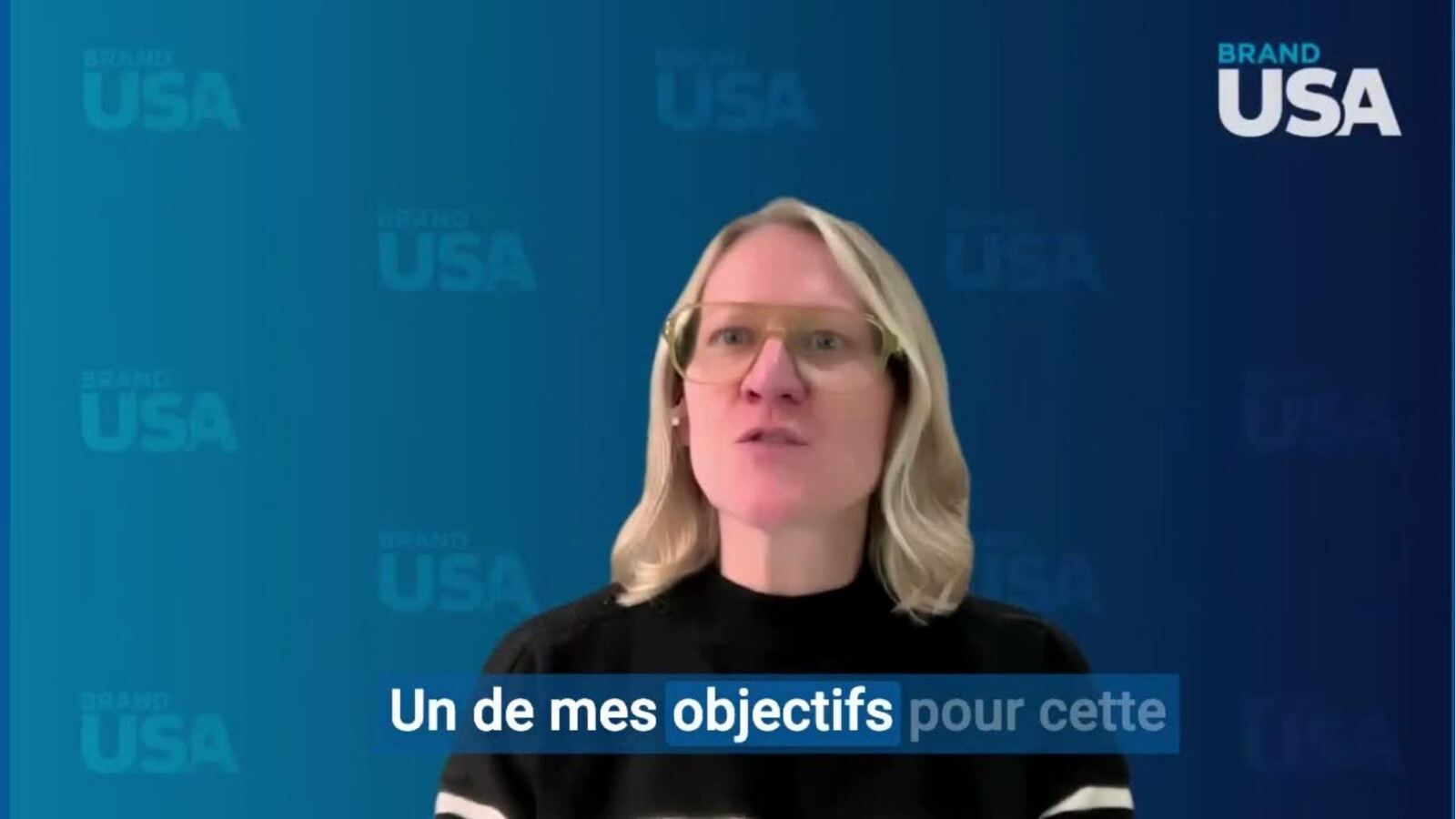
Brand USA trains travel agents in South and Latin America with videos from destinations and businesses. Plenty of those partners have no Spanish speaker on staff.
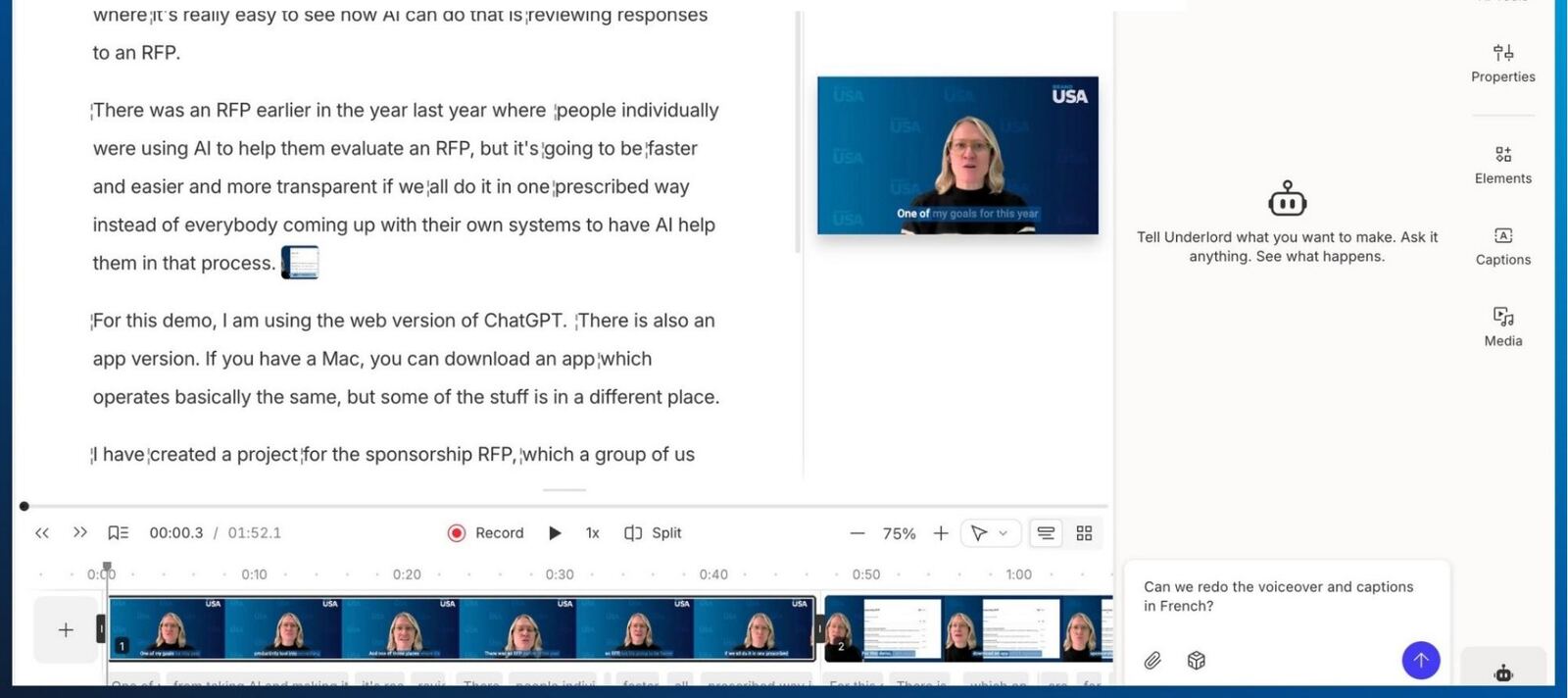
Descript edits video and audio, and it connects to ChatGPT or Claude. You tell your AI what you want done to the video. It produces translated captions and can translate the speaker's voice, so viewers hear the new language.
Keep a human in the loop. The French version came out with a Québécois accent, and only a French speaker would catch that.


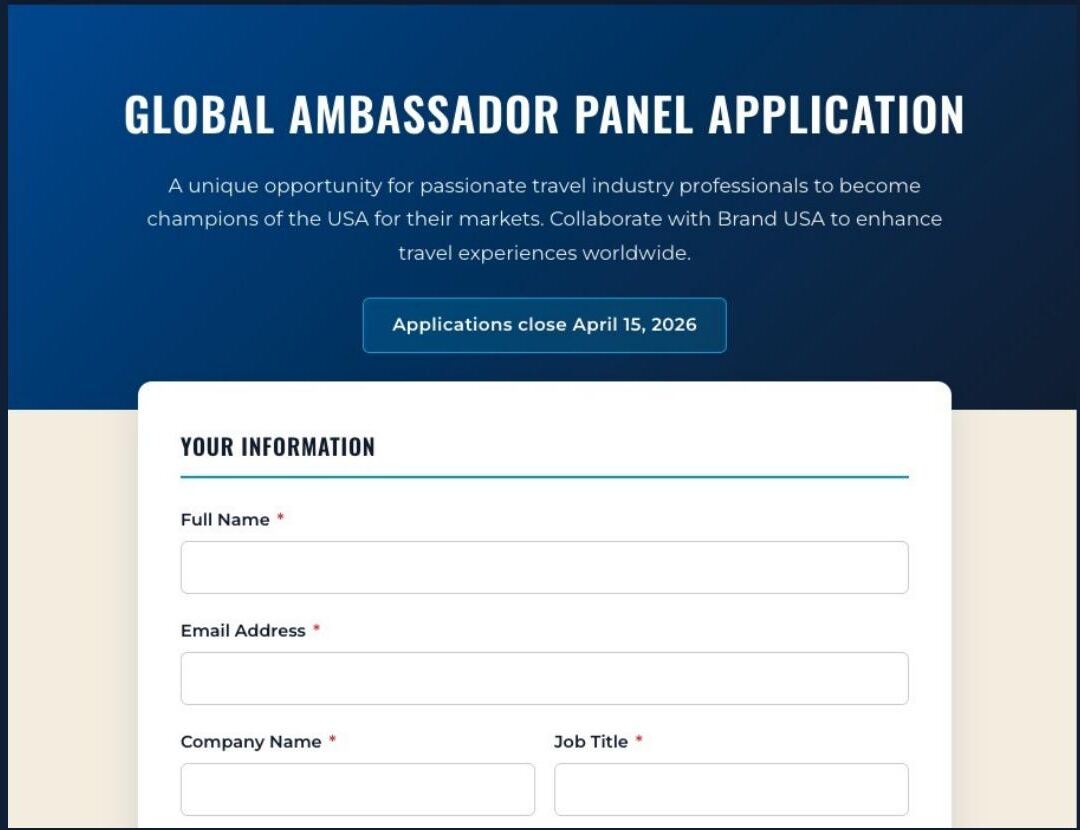
For America250, Brand USA brought on 250 travel advisors from around the world who are also travel influencers, as Global Ambassadors. They applied through a form.
The plan was a plain Google Form, with each response emailed to headquarters and forwarded by hand to the right international rep firm. Janette asked Claude how to make it look more professional. The answer: a branded page that writes to a Google Sheet, with a tab for each market and an automatic email to the right office.
Setup took about an hour, close to what the Google Form alone would have taken. A small business can use the same approach to refresh its own website.

The old way: every department fills out a PowerPoint template by a deadline, someone chases the stragglers, an intern merges the decks, and the plan goes on a shelf until next year.
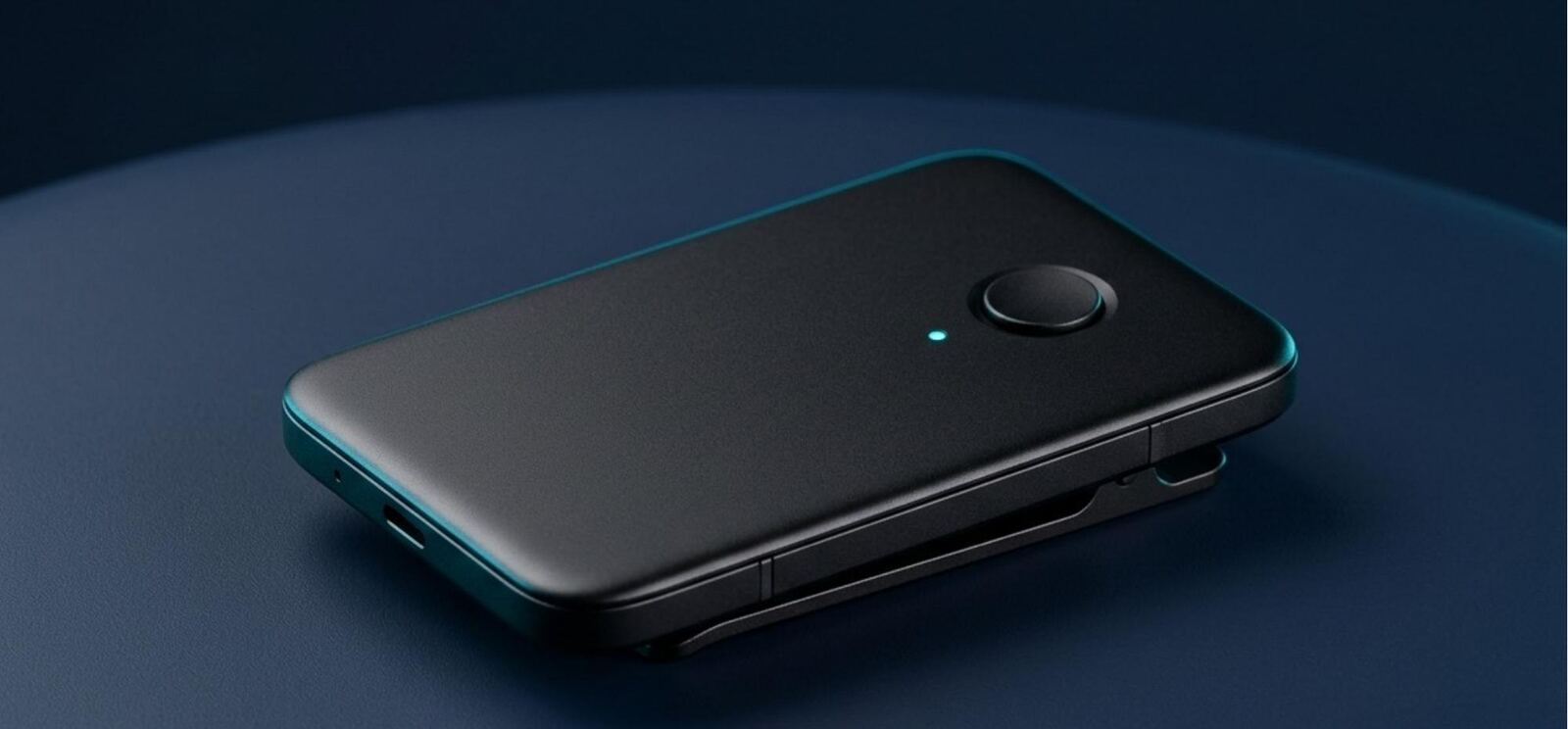
Brand USA now records its strategy meetings with a Plaud pin or Granola, and builds the strategy as a website. After each meeting, AI checks the transcript against the site and proposes updates for review before anything goes live. The whole company can use it, and board updates come together faster.
"The PowerPoint should be serving the work we want to do."

Brand USA's fifteen international offices each send a monthly PDF report into Box. Unless someone goes digging, nobody reads them.
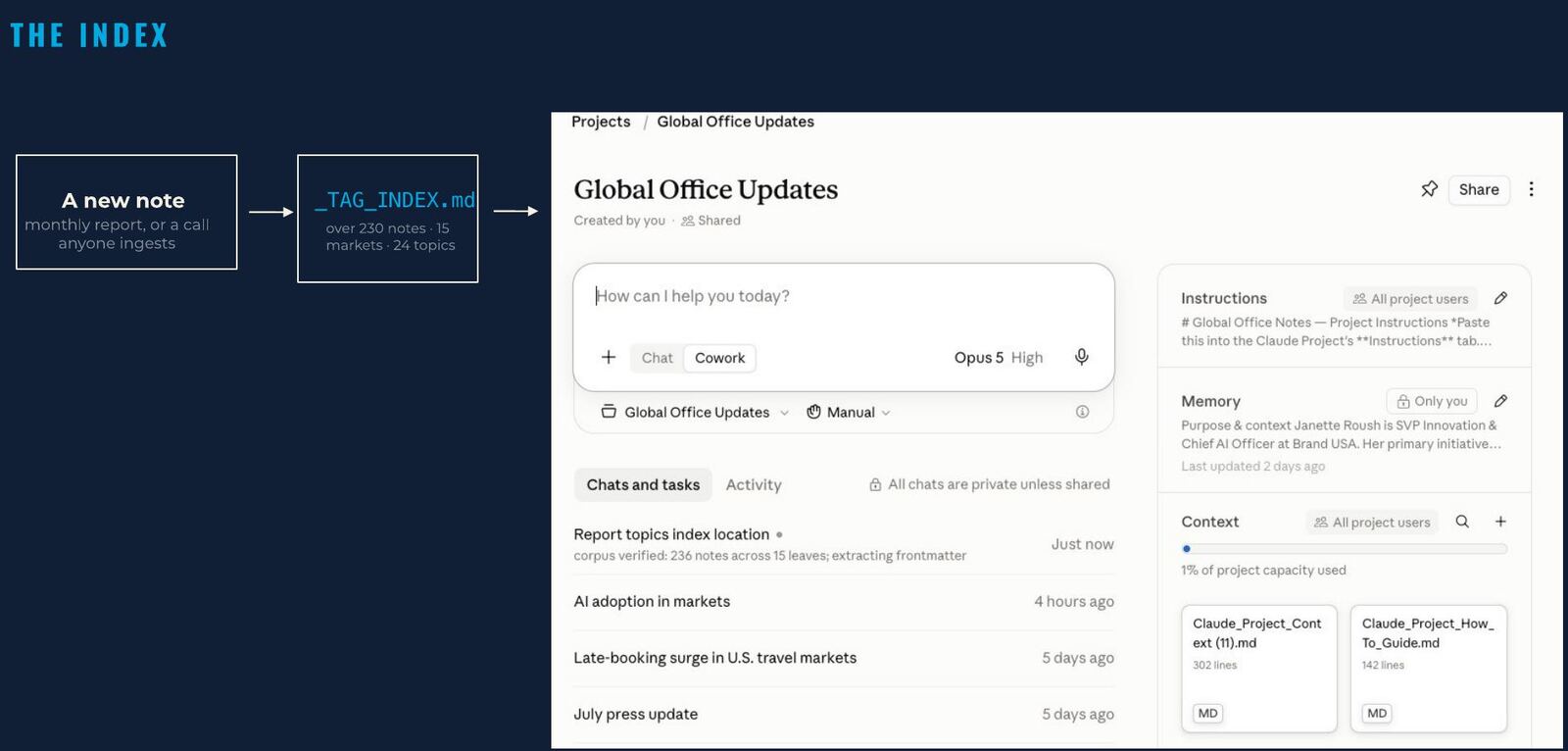
Janette pointed Claude at the folders where the reports already lived and had it build an index: each report, the topics it covers, and a link. A shared Claude project connects to that index. Anyone with access can ask what luxury travelers are doing across the fifteen markets, and Claude answers from the actual reports, then offers to turn the answer into a slide, a PDF, or an executive summary.
The idea comes from Y Combinator, where meeting transcripts, calls, and emails go into one shared memory everyone can use. For ATIA: put three years of convention recaps and booking information in one place your AI tools can reach.

AI takes the junk work so people can focus on the work they like, including coming together in a room like this one. In two years, a lot of this room will work the way Janette works today.
Start with the problems you solve for your stakeholders, then ask where AI helps you solve them better, faster, or cheaper.
Business plans keep company data under company control, and the chat history stays with you when someone leaves. You would never let a departing employee keep their email.
Pick one thing a day and try it there first. Skip waiting for the perfect task, and try again in a month, because the answer may change.
Nobody from OpenAI or Anthropic is coming to show the travel industry how to work with these tools. This is our chance to figure it out together, starting with the breakouts at this conference.
Many of us are stewards of public funds, and there is no reward for spending seven hours on a seven-minute task. Commercial businesses need it to stay competitive. Talk to your IT team, do it safely, and start exploring.